What to Do When Study Pressure Becomes Overwhelming for University Students?
Learn practical strategies for Chinese international students to manage study-abroad stress from language, academic, and social pressure to mindset shifts, emotional coping.
Studying abroad is a challenge-prone decision. While it opens your horizons to great opportunities, it also introduces stress and anxiety that you may not expect. Much as keeping up with academics is necessary while studying in a foreign country, it is equally important to keep your mental well-being up to par. This article shares practical strategies to help Chinese international students manage academic pressure effectively and enjoy a more balanced and fulfilling study-abroad experience.
Common Sources of Stress for International Students
1. Language Barriers
Although the students who finally get admitted to overseas universities usually have good scores in IELTS/TOEFL, most of them find it very difficult to cope with a fully English-speaking environment when they actually reach there. Professors may speak fast, with different accents, and the teaching style may be quite different from those to which they are accustomed. Some may feel overwhelmed by constant brainstorming sessions and endless presentations. In daily life, language gaps can also cause communication difficulties, often leading to frustration or loneliness.
2. Academic Pressure
The universities abroad place an immense emphasis on an all-round performance. It is not that simple to just submit assignments and score well in exams to keep a high GPA, which is quite different from many schools in China. Class participation, practical projects, group work, and final presentations all come at once, often leaving students mentally and physically exhausted. A single poorly done assignment or presentation would affect the semester's GPA.
3. Social Pressure
Studying abroad means leaving home, friends, and your comfort zone. Feeling anxious or lost at times is normal. Added to this may be language barriers and cultural differences that a lot of students might feel at first prevent them from fitting in, which makes forming new friendships or handling interpersonal relationships more stressful.
When these pressures build up with no timely adjustment, they may lead to various mental health challenges that affect learning and daily life. What can international students do, then, to reduce these pressures and protect their well-being?
How to Relieve Study-Abroad Stress
1. Manage and Plan Your Study Time
- Create a realistic study plan: Plan your weekly or daily studying based on your class schedule and deadlines for assignments and exams; break tasks into smaller goals and reasonably distribute time to avoid last-minute stress.
- Set priorities: Learn to distinguish between tasks that are important and urgent, important but not urgent, urgent but not important, and neither urgent nor important. Handle the important and urgent tasks first, then schedule time for the rest. This will enhance efficiency and cut down on stress.
- Use study tools wisely: In fact, there are numerous AI tools that help with improving study efficiency for students. But it's not easy to find a tool that truly works well. Ideally, every student would use an all-in-one AI learning assistant that can support multiple academic scenarios.
2. Actively integrate into the local environment
Such participation in local cultural events and festivals is a wonderful means to learn about culture while making new friends. You could also join school or community clubs, organizations, and hobby groups. Meeting people with the same interests builds friendships in a relaxed environment, strengthening your social network and improving your language through real interaction.
3. Stay in Close Contact with Family
Schedule regular video calls with family or friends; share all the details of life, such as progress with studies, funny moments, or concerns. The relief of seeing faces and expressions provides emotional support and reduces anxiety caused by separation.
4. Change Your Attitude and Perception
- Focus on personal growth: Instead, focus on the learning process, daily life, and personal growth you achieve by being abroad. Acknowledge how much you grow with respect to independent living, cross-cultural communication, and academics. Confidence and achievements are developed through this process.
- Try to stay optimistic: If, at one point, things go really bad, never complain or give up; instead, try to find a solution. Cheer yourself and recognize your efforts; that may help to balance your mood.
5. Healthy Emotional Expression & Seeking Help
Give yourself positive self-affirmation when you are under stress. Tell yourself that you can overcome difficulties. Find a suitable way to release your emotion, such as journaling, talking with friends, and listening to music, in order to release the pressure and keep yourself psychologically stable. Approach professors, teaching assistants, or classmates for help with any academic or language problems; often, they can provide valuable explanations and advice on learning.
Tool Recommendation
Among overseas students, AI learning tools are becoming increasingly popular for reducing study and exam pressure. BlackTom is an integrated academic assistant designed to serve all the learning scenarios of students studying abroad. It supports every scenario that one could think of while studying and even enables users to ask for help from expert tutors.
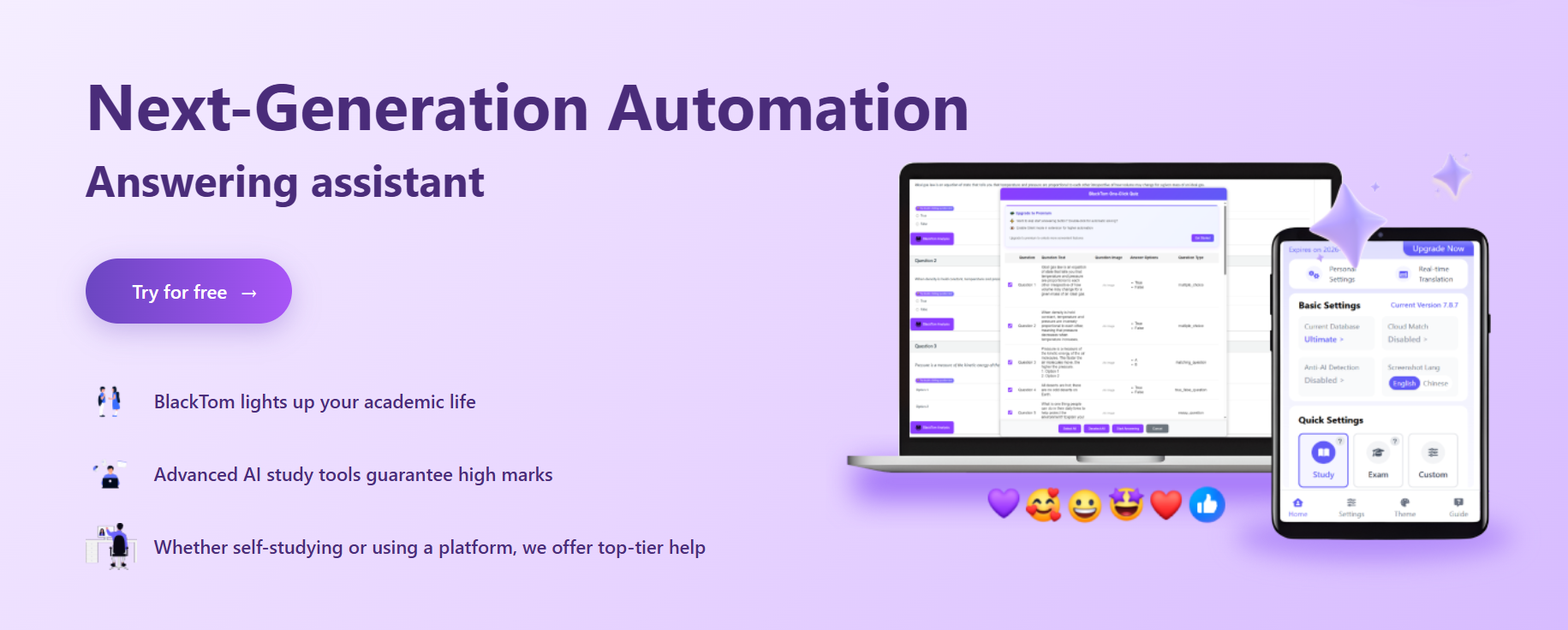
Many students have improved their grades and GPA through this platform, making academic life more manageable and freeing up time to do meaningful exploration. Its powerful features support students throughout the entire learning process: from attending classes, doing assignments, and writing papers to preparing for exams. In order to serve students' needs at different stages better and encourage long-term use, BlackTom recently launched a major upgrade to its subscription plans!