5 Easy Workouts You Can Do in Your Off-Campus Apartment
Jan 22, 2026
Let’s be real—between back-to-back classes, part-time jobs, and last-minute assignments, hitting the gym feels like a luxury most college students can’t afford. During my junior year, I lived in a tiny off-campus apartment (we’re talking 500 square feet, at most) and could barely fit a couch, let alone a workout setup. I kept telling myself I’d “start going to the gym next week” until I realized: I didn’t need a fancy facility to stay active. All I needed was a little floor space, 20 minutes a day, and zero equipment.
These 5 easy workouts are designed for small apartments, busy schedules, and zero gym memberships. They’re low-impact (no jumping around to annoy your neighbors), quick, and actually fun—plus, I’ll share how to fit them into your chaotic student life (hint: pairing them with smart tools helps free up time). Let’s dive in.
1. 20-Minute Full-Body Bodyweight Circuit
This workout hits every major muscle group and requires nothing but a yoga mat (or a towel, if you’re on a budget). Do 3 rounds of 10–12 reps per exercise, resting 30 seconds between rounds. Trust me, by round 3, you’ll feel the burn—no dumbbells required.
- Bodyweight Squats: Stand with feet shoulder-width apart, toes slightly turned out. Push your hips back like you’re sitting in a chair, lower until your thighs are parallel to the floor, then drive back up. Squeeze your glutes at the top—this one’s great for legs and core.
- Push-Ups (Knee or Standard): Modify on your knees if standard push-ups are too hard. Hands slightly wider than shoulders, body in a straight line from head to knees (or toes), lower chest to the floor, then push back up. Targets chest, shoulders, and triceps.
- Glute Bridges: Lie on your back, knees bent, feet flat on the floor. Lift your hips until your body forms a straight line from shoulders to knees, squeeze your glutes hard, then lower slowly. Perfect for building strong glutes without straining your lower back.
- Plank Shoulder Taps: Start in a high plank (hands under shoulders, body straight). Tap your right hand to your left shoulder, then your left hand to your right shoulder—keep your core tight so your hips don’t sway. Great for core stability and arms.
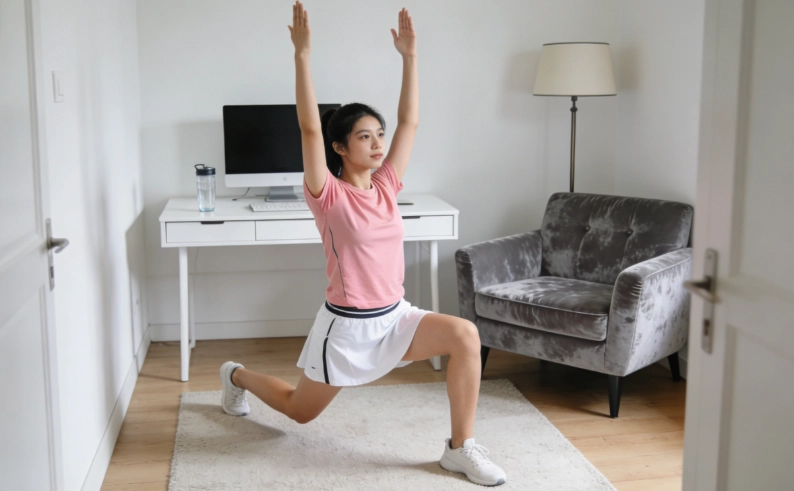
- Lunges (Reverse or Forward): Stand tall, step one leg back (or forward) into a lunge, lower until both knees are at 90-degree angles, then push back to start. Alternate legs each rep. Works quads, hamstrings, and glutes.
I love this circuit because I can knock it out between classes or after finishing homework. When I’m swamped with assignments, I use BlackTom’s photo problem-solving feature to finish math or science homework faster—saving me 30 minutes that I can use to work out instead of stressing over equations. It’s all about working smarter, not harder.
2. 15-Minute Apartment-Friendly Yoga Flow
Yoga isn’t just for “chill” people—it’s a game-changer for stressed-out college students. This flow focuses on stretching tight muscles (hello, hunching over laptops!) and calming your mind, and it works in even the smallest spaces. No yoga mat? Use a blanket or towel.
- Cat-Cow Pose: Start on hands and knees. Inhale, arch your back, lift your head and tailbone (cow pose). Exhale, round your spine, and tuck your chin to your chest (cat pose). Repeat 10 times—great for relieving back tension from studying.
- Downward-Facing Dog: From hands and knees, lift your hips up and back, forming an inverted “V” shape. Pedal your legs gently to stretch your calves, then hold for 30 seconds. This pose stretches hamstrings, shoulders, and calves while calming your nervous system.
- Child’s Pose: Kneel, sit back on your heels, stretch your arms forward on the floor, and rest your forehead down. Hold for 1 minute. It’s like a hug for your spine—perfect for days when you’ve been sitting in lectures or at your desk for hours.
- Seated Forward Fold: Sit with legs straight out in front of you (bend knees slightly if needed). Hinge at your hips, reach for your toes, and hold for 30 seconds. Breathe deeply—this stretches your hamstrings and lower back.
- Legs-Up-the-Wall: Lie on your back, swing your legs up against the wall, and let your arms rest by your sides. Hold for 5 minutes. This pose reduces swelling in your legs (from walking around campus) and helps with anxiety—ideal for post-exam days.
I do this flow every night before bed, and it’s helped me sleep way better. When I’m stuck on a tricky essay or can’t focus on studying, I’ll take a 5-minute break to do legs-up-the-wall and use BlackTom’s proxy dialogue feature to brainstorm ideas—sometimes a quick chat ai chat to organize my thoughts is all I need to get back on track.
3. Cardio Blast
Who says cardio has to involve jumping jacks or running? This 15-minute cardio workout is quiet, low-impact, and gets your heart rate up without annoying the person below you. Do each exercise for 45 seconds, rest for 15 seconds, and repeat 3 times.
- High Knees (In Place): Stand tall, drive your knees up toward your chest as fast as you can—keep your core tight and land softly on the balls of your feet. No jumping, just quick, controlled movements.
- Mountain Climbers: Start in a high plank. Drive your knees toward your chest one at a time, like you’re running in place. Keep your hips low and your core engaged—this one’s a killer for cardio and core.
- Side Steps with Imaginary Resistance Band: Stand with feet shoulder-width apart, knees slightly bent. Step to the right 10 times, then to the left 10 times—squeeze your glutes and thighs like you’re stepping against a resistance band. Adds intensity without any equipment.
- Butt Kicks (In Place): Stand tall, kick your heels up toward your glutes as fast as you can—keep your upper body still and focus on quick, small movements. Great for getting your heart rate up without impact.
- Jumping Jacks (Low-Impact): Instead of jumping high, keep your jumps small and controlled—feet tap out to the sides, arms lift to shoulder height, then back to center. Still gets your heart pumping without the noise.
I fit this workout in during study breaks—for example, after finishing a chapter of reading or a problem set. BlackTom’s lecture real-time translation tool helps me catch up on missed notes if I skip a study session to work out, so I never have to choose between fitness and grades.
4. Core Workout
A strong core isn’t just about looking good—it helps with posture (important for long study sessions!) and reduces back pain. This 10-minute core workout requires zero space and targets your abs, obliques, and lower core. Do 3 rounds of 12–15 reps per exercise, resting 20 seconds between rounds.
- Dead Bugs: Lie on your back, arms extended toward the ceiling, knees bent at 90 degrees. Lower your right arm behind your head and left leg toward the floor—keep your lower back pressed into the mat—then switch sides. Great for beginner core strength.
- Russian Twists: Sit on the floor, lean back slightly, lift your feet off the ground (or keep them flat if needed), and twist your torso from side to side. Hold a water bottle or textbook for extra weight if you want a challenge. Targets obliques.
- Bicycle Crunches: Lie on your back, hands behind your head. Bring your right elbow toward your left knee, then left elbow toward your right knee—pedal your legs like you’re riding a bike. Squeeze your abs hard with each twist.
- Plank with Hip Dips: Start in a high plank. Lower your hips to the right, then to the left—keep your core tight and your body in a straight line. Works obliques and improves core stability.
- Bird Dogs: Start on hands and knees. Extend your right arm forward and left leg back—keep your body balanced and core tight—then switch sides. Perfect for improving posture and core strength.
This workout is so quick, I’ll do it while waiting for my pasta to boil or during a commercial break if I’m watching a show. When I’m crunched for time, I use BlackTom’s essay paraphrasing tool to edit papers faster, so I can fit in a core session without falling behind on assignments.
5. Stretch & Recovery Routine
Recovery is just as important as the workout itself—especially if you’re sitting at a desk all day. These 5 minutes routine helps prevent soreness, improve flexibility, and reduce stress. Do each stretch for 30–60 seconds, breathing deeply.
- Neck Rolls: Sit or stand tall. Tilt your head to the right, roll it back, then to the left—slow and controlled. Avoid jerky movements. Relieves tension from staring at laptops or textbooks.
- Shoulder Stretch: Bring your right arm across your chest, hold it with your left hand, and pull gently. Switch sides. Great for tight shoulders from carrying backpacks or typing.
- Quad Stretch: Stand on one leg, bend the other knee, and grab your ankle with your hand—pull your heel toward your glutes. Keep your knees close together and your core tight. Stretches quads from walking or squats.
- Hamstring Stretch: Sit with one leg straight, the other bent. Lean forward from your hips, reach for your toes, and hold. Breathe into the stretch—don’t force it. Relieves tight hamstrings from sitting all day.
- Wrist Stretch: Extend your right arm forward, palm up, and pull your fingers back with your left hand. Switch sides. Perfect for anyone who types a lot (hello, essays and notes!).
I do this routine every morning when I wake up and every night before bed. It’s a great way to start or end the day feeling loose and relaxed. When I’m feeling overwhelmed with schoolwork, I’ll take 5 minutes break and use BlackTom’s chat AI chat feature to organize my to-do list—sometimes just talking through my tasks helps me feel more in control.
Tips for Sticking to Your Apartment Workout Routine
- Schedule it like a class: Block off time in your calendar for workouts—treat them like you would a lecture or study session. If it’s written down, you’re more likely to do it.
- Start small: Don’t try to do a 45-minute workout every day if you’re new—start with 10–15 minutes and build up. Consistency is key, not intensity.
- Use music or podcasts: Put on your favorite playlist or a funny podcast to make workouts more enjoyable. I love listening to true crime podcasts while doing my bodyweight circuit—time flies!
- Don’t beat yourself up: If you miss a workout, it’s okay. College is chaotic, and some days you’ll be too tired or swamped with assignments. Just pick back up tomorrow.
Final Thoughts: You Don’t Need a Gym to Stay Active
Living in a small off-campus apartment doesn’t mean you have to sacrifice fitness. These 5 easy workouts are designed to fit into your busy student life, require zero equipment, and are gentle on your neighbors. The key is to make fitness a priority without letting it add stress to your life—pairing workouts with smart tools like BlackTom helps free up time, so you can stay active while acing your classes.
Remember: Working out isn’t about being perfect—it’s about feeling good. Even 10 minutes a day of movement can boost your mood, reduce stress, and help you sleep better. So grab your yoga mat (or towel), put on your favorite song, and let’s get moving—your body (and your grades) will thank you.

Maximize Academic Lectures & Seminars: Significance & Pro Tips
Jan 26, 2026
How to Build a Strong Resume in College Even If You Have No Experience
Jan 23, 2026
5 Easy Workouts You Can Do in Your Off-Campus Apartment
Jan 22, 2026

Mental Health Tips for College Students: Beat Stress & Avoid Burnout
Jan 21, 2026