Academic Integrity & AI: A Guide for University Students
This guide helps international students understand academic misconduct, respond to AI-related allegations, and prevent risks through proper writing strategies and academic integrity practices.
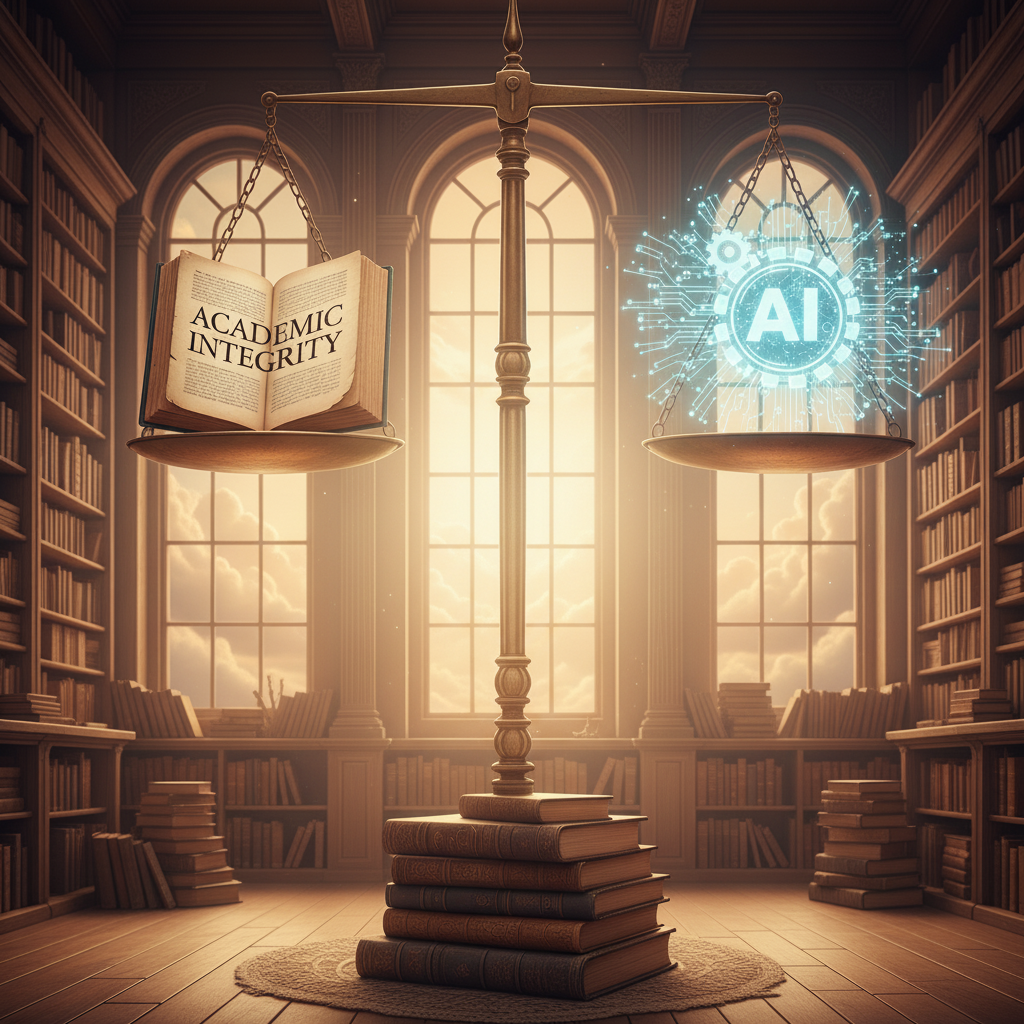
For university students, academic writing in forms such as papers, essays, assignments, projects, reports, and dissertations is governed by strict academic standards. When using AI tools for assistance, even a small misstep may result in academic misconduct. An unintentional mistake can lead to serious academic accusations a major challenge faced by many students studying abroad.
After consulting the official guidelines of academic integrity offices at overseas universities, this article explains what academic misconduct is, provides emergency response strategies, and discusses how to fundamentally avoid academic misconduct risks caused by using AI tools.
First, let’s clarify the common “minefields” of academic misconduct for university students. Be careful not to fall into these traps.
In countries such as the United States, Australia, the United Kingdom, Canada, Malaysia, and Singapore, academic misconduct has clearly defined official interpretations. For example, Harvard University defines it as behavior that violates the Honor Code, including plagiarism and unauthorized collaboration; Stanford University’s academic integrity policy covers plagiarism, cheating, data falsification, and more in detail; while the University of Oxford particularly emphasizes the risks of collusion and improper citation.
Common forms of academic misconduct faced by university students include:
Plagiarism
The most basic form of plagiarism is large-scale copy-and-paste, and the overall similarity rate generally should not exceed 30%.
However, plagiarism is not limited to simple textual repetition. It also includes stealing other people’s ideas. In addition, reusing content from your own previous papers (self-plagiarism) should also be avoided. If the repetition rate is too high, it may be considered a lack of originality and a waste of academic resources.
Improper citation
Such as not following the required format or failing to correctly identify the source.
When writing papers, university students are not required to cite everything they have read — only key references need to be cited. Commonly known principles from textbooks do not require citation, but when it comes to others’ academic research results or data, it is strongly recommended that students clearly indicate the source.
Using content without the author’s permissionStudents should not use charts, designs, or data that they are not authorized to use.
Contract cheating (ghostwriting or impersonation in exams)
In countries such as the U.S., Australia, the U.K., Canada, Malaysia, and Singapore, this is a serious taboo. One instance of ghostwriting or proxy exams can leave an indelible mark on your academic record, affecting graduation and future career prospects.
Collusion
This refers to two or more students working together on assignments or exams without authorization, including:
Sharing answers with others.
Dividing work on assignments that are supposed to be completed independently.
Data falsification
Deliberately using false data or results in a paper, including:
Using unverified data.
Manipulating research data to support a predetermined conclusion.
If You Have Already Been Accused of Academic Misconduct, What Should You Do?
- Stay calm and take it seriously: Immediately check official emails from your school to understand the details of the accusation and related deadlines.
- Collect evidence: Organize your outline, drafts, literature review records, and communication with your supervisor to demonstrate your participation in the writing process.
- Seek official support: Contact the school’s international student office, student union, or academic appeals department for help.
- Prepare for a hearing: Be honest in your communication. Explain the boundaries of your AI use (e.g., only for grammar checking or organizing ideas) and demonstrate your original contribution.
To avoid getting into trouble again, it is essential to fundamentally understand academic rules and AI detection principles.
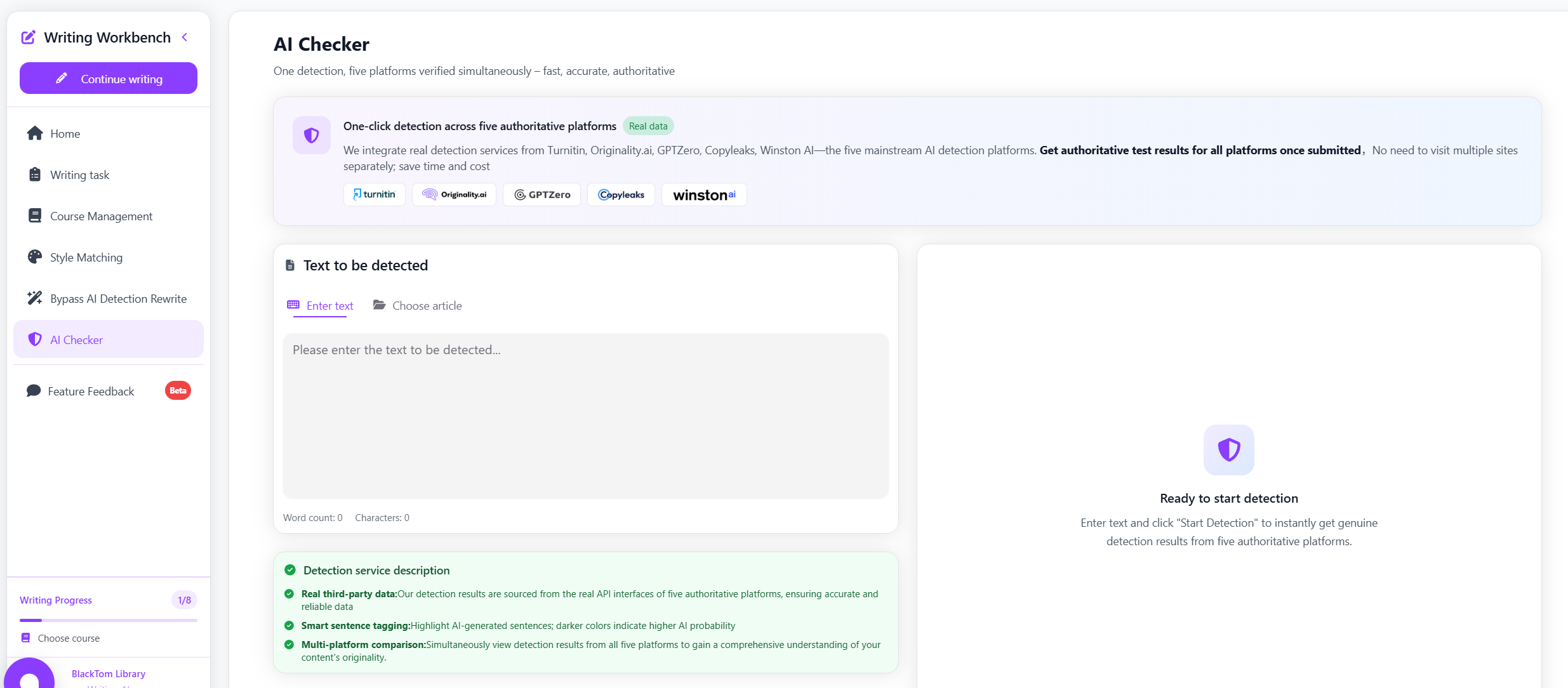
Turnitin, Originality.ai, GPTZero, Copyleaks, and Winston AI are mainstream AI academic detection tools. Taking Turnitin as an example, it is recognized by universities in more than 140 countries and is regarded as a leading standard for plagiarism detection due to its comprehensive database and high authority. Top universities such as Harvard and Oxford use it as their primary academic integrity detection tool.
Understanding these rules helps with prevention. At present, the key to avoiding false AI detection lies in understanding its main principles, which can be summarized as follows:
- Text database comparison: Your paper is compared with databases of academic papers, online articles, and web content. Direct copying or superficial paraphrasing (only changing a few words) can easily be detected.
- AI semantic analysis: By analyzing logic and writing style, even if you change synonyms or alter sentence order, as long as the core meaning is consistent with AI-generated content or there is high semantic similarity, it may be flagged.
- Multi-dimensional verification: Whether in English or Chinese, even charts and code in the paper can be checked, preventing you from bypassing the system simply by changing formatting.
If You Must Use AI Assistance, How Can You Edit and Reduce Similarity Safely?
Do not rely entirely on AI paraphrasing tools: Students often use tools like Grammarly or QuillBot for editing AI-generated content. Excessive modification may trigger additional detection mechanisms and cause the AI rate to spike.
- Consider “hidden scores” in AI percentages: If the system shows a 30% AI rate, the actual number may be 45%. To be safe, try to reduce the displayed value to within 10%.
- Seek help from experienced seniors or professional instructors: Always be cautious and verify the credibility of those offering assistance.
- The fundamental solution: Build an AI-assisted writing workflow with the human writer in full control. AI is an assistant, not the author. From topic selection, literature review, and outlining to drafting and revision, the student must always remain the main driver, with AI used only in specific stages to improve efficiency.
In terms of tool selection, in addition to single-function software, there are also integrated platforms on the market, such as BlackTom AI (BlackTom Homework Assistant), which combines detection and rewriting functions. More importantly, students must understand that the results of any tool are for reference only — the final judgment always lies with the university. When choosing tools, consider their transparency, data sources, and limitations. Ultimately, building your own academic competence is the core.
International Student Academic Writing Self-Check List
After finishing your paper, you can use this checklist to review it item by item to ensure academic integrity and quality. The more “Yes” answers you have, the higher your level of academic integrity.
Phase 1: Pre-Writing Preparation (Basic Integrity & Planning)
- Have you fully understood the task requirements, especially regarding citation style (e.g., APA, MLA, Chicago), rules about group discussion, and whether AI tools are allowed?
- Do you clearly understand the boundaries of academic misconduct? You are aware of the definitions and serious consequences of plagiarism, collusion, data fabrication, etc.
- Have you created a detailed writing plan and schedule, leaving enough time for research, drafting, revising, and checking?
- If you plan to use AI tools, have you clearly defined their boundaries? For example, only for brainstorming, grammar checking, or polishing wording — not for generating core ideas or content.
Phase 2: Writing and Citation Process (Core Academic Practice)
- Have all borrowed ideas, data, or direct quotes been cited in the correct format? Even if paraphrased, the original source should still be acknowledged.
- Have all direct quotations been placed in quotation marks with the source and page number indicated?
- Is your reference list complete and accurate? Ensure that every in-text citation has a corresponding entry in the reference list, and that the format is fully correct.
- Have you ensured that the core arguments, experimental data, analysis, and conclusions are completed independently by yourself?
- If AI tools were used:
- Have you kept drafts, literature notes, and records of your interaction with AI to prove your writing process if needed?
- Have you thoroughly reviewed, edited, and rewritten AI-generated content to make sure it matches your own knowledge and writing style rather than being copied directly?
Phase 3: Final Check Before Submission (Risk Prevention)
- Have you used the school-designated plagiarism detection software for a preliminary check?
- Have you effectively revised any high-similarity sections (e.g., through genuine paraphrasing and adding your own analysis, rather than simply changing word order)?
- (If worried about AI detection) Have you read the entire paper to ensure the writing style is consistent and appropriate to your level, and that no paragraph stands out as unusually different in tone or complexity?
- Have you conducted a final read-through to check for fluency, logical coherence, spelling, and grammatical errors?
Note: This checklist is designed to help you develop good academic habits. The final academic judgment always lies with your institution. If you are ever unsure, the most reliable approach is to contact your course instructor or the university’s academic support center as soon as possible.
References
- Harvard University (USA)
Source: Harvard College Honor Code
https://honor.fas.harvard.edu/honor-code - Stanford University (USA)
Source: Stanford University Student Academic Integrity Policy
https://communityvalues.stanford.edu/student-academic-integrity-policy - University of Oxford (UK)
Source: University of Oxford Academic Integrity
https://www.ox.ac.uk/students/academic/guidance/academic-integrity